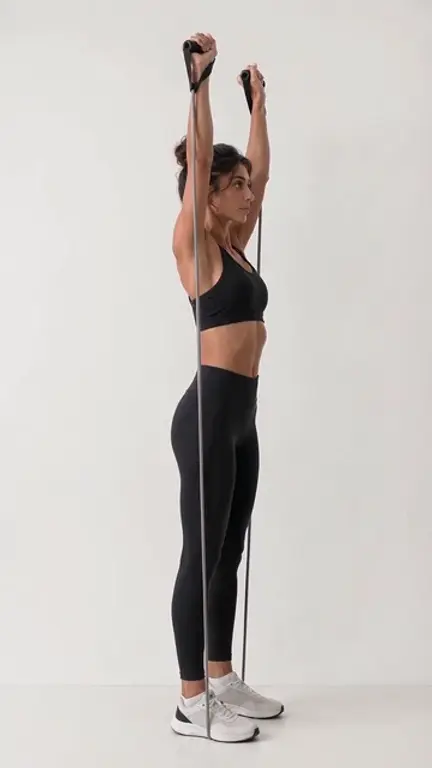
Why lifting keeps the muscle a diet takes
Dieting alone takes muscle with the fat. Lifting is what keeps it. Here is how weights, cardio and your daily thirty minutes fit together, from a trainer who has been at this since 2005.
Picture three people. Someone dieting with no exercise ends up flabby and skinny. A marathon runner ends up skinny with little muscle. A sprinter has low body fat and real muscle.
The outcome you actually want
The sprinter is the outcome you actually want. Low body fat with real muscle under it. More muscle relative to fat means a lower body fat reading, and that is a different target from a lower number on the scale.
That is why the scale on its own is a poor judge. Two people at the same weight can carry very different amounts of muscle. What we track is what the weight is made of.

Anaerobic builds, aerobic does not
Anaerobic training means weights and short bursts of effort. It builds and maintains muscle. Aerobic training, meaning steady cardio, tends to maintain or even reduce muscle over time. Both have a job. Only one of them is building it.
So weight training is the most effective way to maintain, or build, your lean body mass. That is everything in your body that is not fat: bone, muscle, tissue. Tendon and ligament strength comes with it.

Under thirty seconds of tension
Muscle fibers grow largest when working under tension for under 30 seconds. Past that, the effort shifts toward aerobic, which produces smaller muscle size. So the set length is a choice, not an accident.
That is why I pick the load for the set in front of me, and why I count. A set that drags past the window turns into conditioning work you did not ask for.

What cardio is actually for
Cardio is not the enemy. It helps counter fatigue and speeds results while you are trying to lose weight or get in better shape. What it will not do is hold your muscle for you.
So the amount is not a guess. The consultation asks your typical daily activity level, and what you already do on your own sets where the cardio starts. The lifting days get built first.
Where thirty minutes a day puts you
Before anything gets written, the consultation makes you pick a band: sedentary, lightly active 1-3 days a week, moderately active 3-5, or very active 6-7. Answer honestly. This keeps your program safe.
Thirty minutes a day is a floor to clear, not a target to hit. If the weight is still climbing at thirty minutes a day, the answer is either more time exercising or a closer look at your calorie intake.

Your trainer
Five certifications: NASM CPT and Master Trainer, NASM-CES, NASM-PES, NCSF and PFIT, plus a current CPR card. I have trained clients since 2005 and founded OC Personal Training in Irvine in 2008.
NASM-PES is the performance credential behind how I load a set, and NASM-CES is the corrective one behind how I watch it. Your programming follows the NASM Optimal Performance Training model, which means the basics come before the load goes up.

Lifting matters more for women
Significant muscle gain generally does not happen by accident. It takes deliberate, sustained resistance training, because female hormones, estrogen especially, work against muscle building by default.
So the fear of getting bulky from lifting has it backwards. Resistance training is more important for women's quality of life, not less. Individual results vary.

Tired reps are where form slips
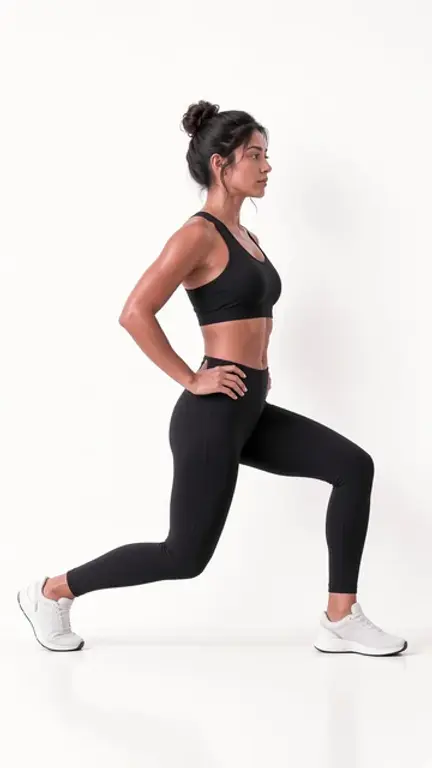
In a deficit you train tired, and tired reps change shape. On squats I will tell you to keep your chest up and sit back into your hips, not forward onto your toes. Keep your heels planted.
Knees that drift inward are worth naming. The pattern is associated with knee pain and IT band tendonitis, and pairs a tight adductor complex with a weak gluteus medius. So you hear drive your knees out over your toes.

How your week gets built
A week that keeps muscle has the lifting as its spine and the cardio hung off it. Plans here start at $197 a month, and the one you pick decides how many of those lifting days happen beside me.
The studio is appointment only, with evening slots to 8 PM on weekdays. VeraForma Premium comes free with every plan, so the cardio and the thirty-minute days you do alone still sit in one place.

What the free hour settles
The free hour is where this stops being general. I ask how you would rate your eating habits and nutrition knowledge, and typical day, what do you usually eat.
Then goals: what areas do you want to improve most, and why. Injuries and surgeries get written down. If you have a condition, get cleared by your own doctor first, and training is built around what the movement screen finds.

Questions
Will cardio alone keep my muscle?
Not reliably. Cardio can hold what you already have at best, and the longer and steadier the effort gets, the less it does for muscle size. The weights are what keep it.
How much cardio should I do?
At least twice a week. The weekly plans put the cardio, nutrition and stretching programs in writing next to the lifting, so the amount is not left to you to guess.
Will lifting make me look bulky?
Not by accident. Visible size takes deliberate work aimed at exactly that, and your program is built for the primary goal you give in the free hour. Individual results vary.
How often should I lift each week?
One, two or three private sessions a week is how the plans are built, and the free hour is where we pick yours. The movement screen decides where the load starts.
How do I book a session?
Call (949) 574-4755 or use the free session form with your name, email and phone. You get a call within 1 business day to set the time.

Book your free session
OC Personal Training, 17165 Von Karman Ave, Suite 103, Irvine, CA 92614. Open Monday to Friday, 6 AM to 8 PM. Closed Saturday and Sunday.
Call (949) 574-4755 to book. Your first hour is free and one-on-one, with no credit card and no obligation. We cover goals, a posture and movement check, and a short workout.